

Dr Norman Marcus
Disability from chronic pain is rising in nearly every region of the world, with low back pain now the leading cause of disability globally according to the World Health Organization.
The consequences of this blind spot extend far beyond individual suffering. Misdiagnosed muscle pain is shaping global disability statistics, influencing workforce participation, driving healthcare costs, and distorting public-health priorities. Understanding its impact requires looking not only at what is being treated, but what is being missed.
Musculoskeletal conditions collectively account for 1.71 billion cases worldwide, making them one of the most prevalent health burdens on the planet. Low back pain alone affects more than 600 million people at any given time.
However, what these statistics rarely capture is the proportion of pain that originates not from bones, joints, or nerves but from muscles and soft tissues.
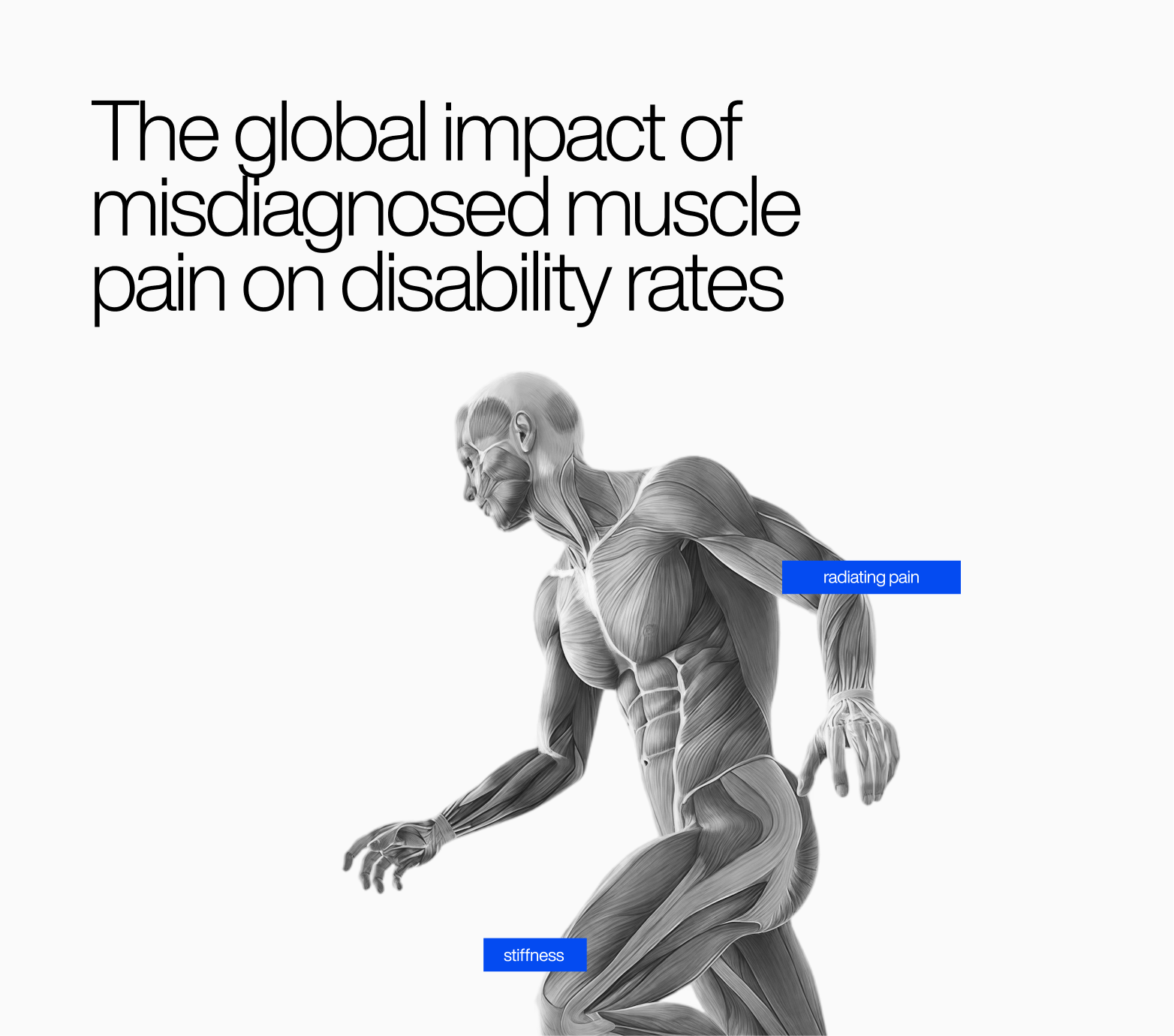
Muscle dysfunction is capable of producing:
Yet muscular causes of pain are rarely reflected in global disability reporting because large-scale health statistics typically track structural diagnoses rather than functional soft-tissue conditions.
As a result, a significant contributor to disability may remain undercounted even as millions struggle with symptoms that limit mobility, work participation, and daily function.
Misdiagnosing muscle pain sets off a predictable and damaging chain reaction:
When diagnostic attention centers primarily on structural findings, clinicians may attribute symptoms to visible abnormalities while functional muscular contributors remain unexplored.
The longer muscle pain goes unrecognized, the more it contributes to movement avoidance, guarded posture, and central sensitization, all of which deepen disability.
Patients may receive treatments directed at joints, discs, or nerves even when surrounding muscle dysfunction plays a substantial role in the pain experience.
Without proper treatment, patients lose mobility, reduce work activity, and often enter long-term disability programs.
Across all these stages, muscles are the missing link, the untreated cause behind escalating impairment.
Chronic musculoskeletal pain accounts for some of the highest rates of absenteeism worldwide. In many developed countries, back pain alone surpasses heart disease and cancer as a reason for early retirement.
Misdiagnosing muscle pain contributes to this burden by:
The costs are staggering. In the United States alone, back and neck pain account for over $380 billion per year in direct healthcare expenses and productivity losses.
If muscle pain were accurately diagnosed at scale, global disability figures, and the costs associated with them, could shift dramatically.
Correcting this diagnostic blind spot is not simply a clinical improvement, it is a public-health strategy.
Expanding clinician training in muscular assessment and soft-tissue pain science would help improve recognition of one of the most common drivers of chronic musculoskeletal symptoms.
Organizations such as the WHO and national health ministries must recognize muscle pain as a primary contributor to disability.
Physical therapy, manual therapy, and muscle-targeted interventions must be accessible, affordable, and part of first-line care.
More funding is needed for large-scale studies on muscle pain prevalence, biomarkers, and treatment outcomes.
Millions of people live with chronic pain not because their condition is untreatable, but because it is misunderstood. The global disability burden of musculoskeletal pain will not decline until muscle pain, one of its central and most treatable causes, is acknowledged and addressed.
Recognizing muscle pain is not a small correction. It is a global imperative.
When healthcare systems, policymakers, and clinicians begin seeing muscles as the critical contributors they are, disability rates can fall, patient outcomes can improve, and societies can begin reclaiming the human and economic potential lost to misdiagnosed pain.