

Dr Norman Marcus
For millions of people living with chronic pain, one moment often defines their medical journey: when a scan comes back “normal.” The message sounds reassuring, but for patients still in pain, it creates a bewildering contradiction, How can I hurt this much if nothing is wrong?
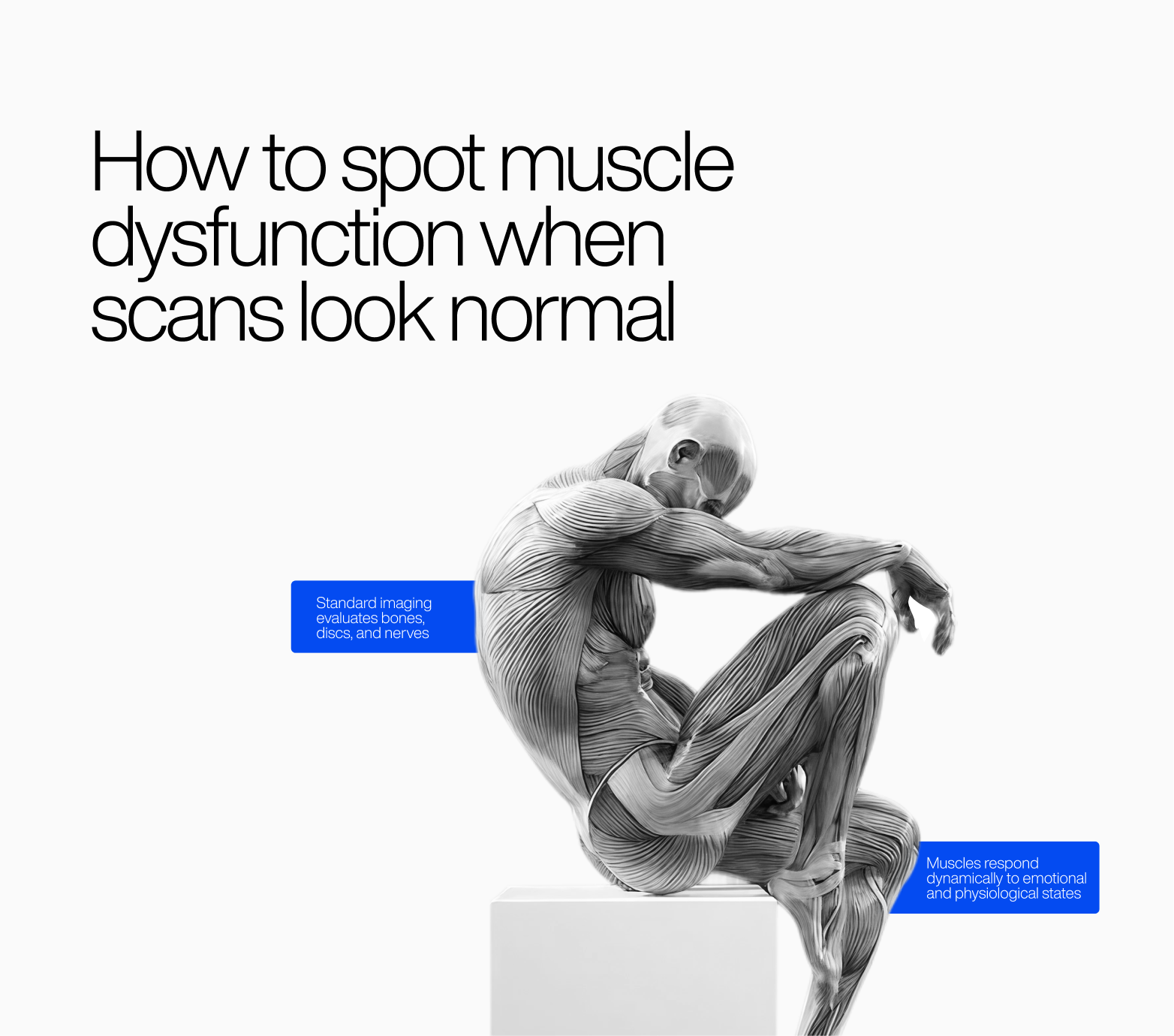
The answer may lie in what the scan cannot show. While imaging technologies such as MRIs and CT scans have become central to pain diagnosis, they are designed to detect structural abnormalities in bones, discs, and nerves.
Below are the key patterns, signs, and clinical clues that research has consistently linked to muscular origins of pain.
Research consistently shows that structural “abnormalities” such as disc bulges, arthritis, and degeneration are common in healthy adults without pain, while many patients with significant symptoms show little or no structural explanation on imaging.
When a patient’s symptoms do not align with what the scan reveals or when the scan reveals age-appropriate changes unrelated to pain, the muscular system becomes a leading suspect.
Muscle pain is biomechanical. It responds to:
If pain worsens during activities such as bending, rotating, lifting, sitting, or reaching, it often suggests dysfunction in muscles responsible for those movements.
Unlike nerve pain, which tends to follow predictable dermatomal patterns, muscle pain is typically movement-dependent.
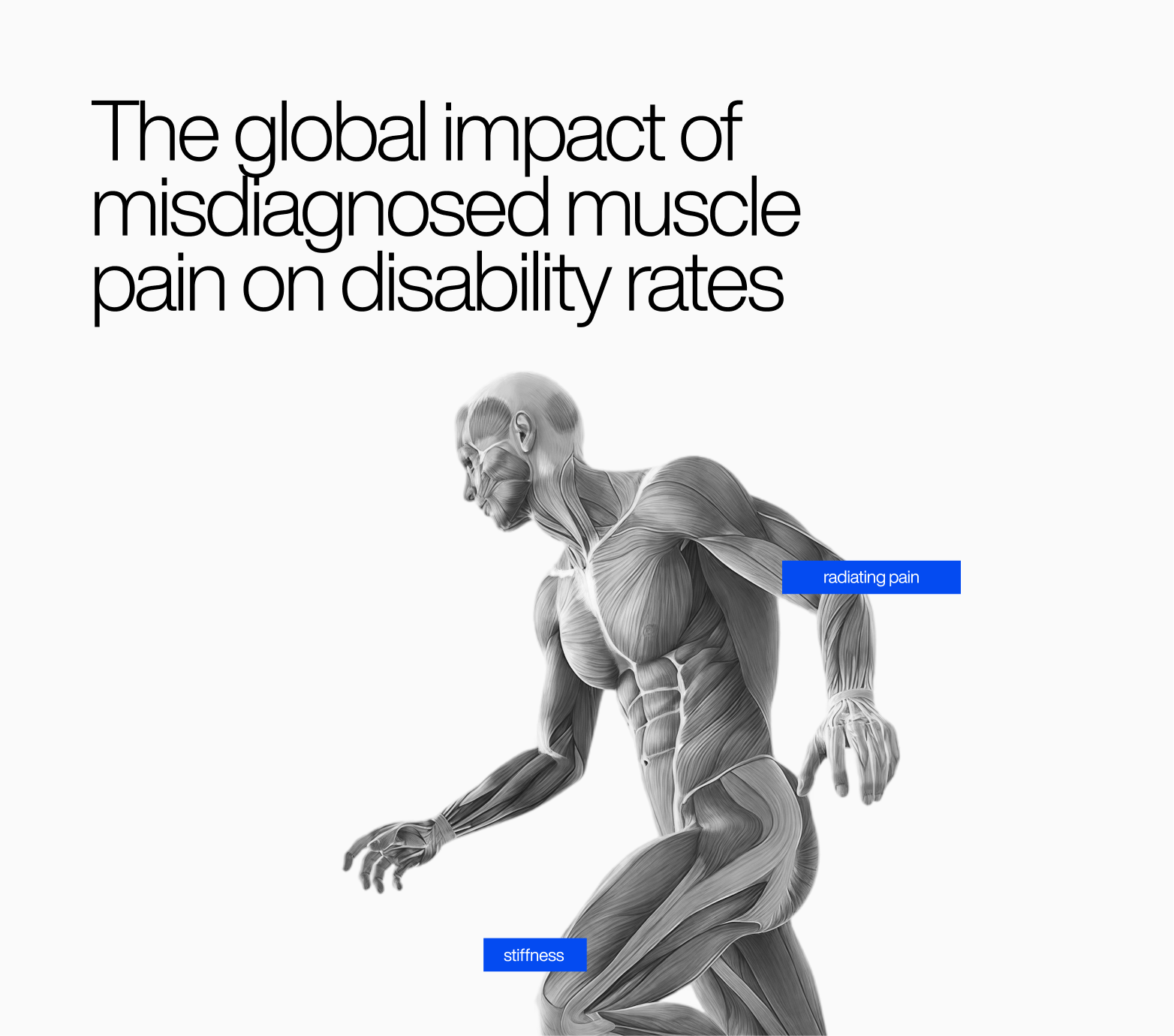
One of the most confusing features of muscle pain is referred pain discomfort felt in an area distant from the true source.
For example:
This phenomenon has been documented extensively in myofascial pain research. When pain radiates in patterns not explained by imaging or nerve compression, a muscular source is suspected.
Palpation, a simple, hands-on assessment is the gold standard for the detection of trigger points (TrPs) as a source of muscle pain. Research shows that irritable muscle fibers, or TrPs often present as:
If gentle pressure on a muscle reproduces the exact pain a patient experiences, it is strong evidence of a muscular component.
Muscles respond dynamically to emotional and physiological states. Poor sleep, high stress, and systemic fatigue can all increase muscle tension and reduce recovery capacity.
This explains why many patients report:
Muscle dysfunction often results in:
When strength is limited primarily because of pain rather than neurological deficit, this phenomenon is referred to as pain inhibition. In these cases, reflexes and sensory testing typically remain intact.
Research increasingly links chronic muscle pain to:
These factors overload or tighten specific muscle groups, laying the groundwork for persistent pain.
Recognizing muscle-related pain requires expanding the diagnostic lens beyond imaging. A comprehensive evaluation should include:
When clinicians incorporate these elements, diagnostic accuracy improves dramatically, and patients gain access to treatments that actually address the source of pain.
For millions living with unexplained pain, understanding this distinction may be the first step toward relief.