.webp)
.webp)
Dr Norman Marcus
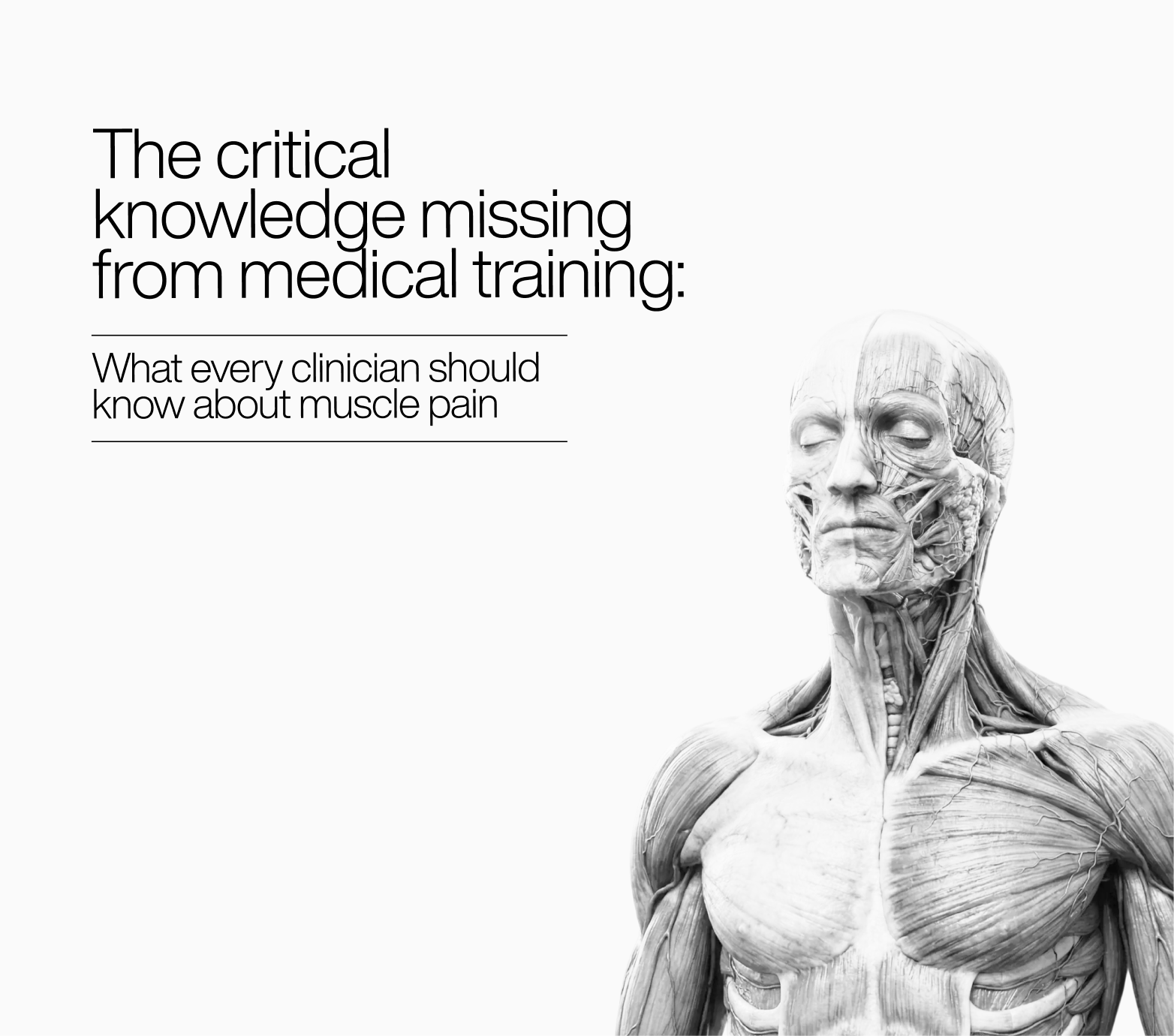
In medical education, various organ systems are studied including their role in producing acute and chronic pain: the skeletal, nervous, cardiovascular, gastrointestinal, and urogenital systems. But one system - despite comprising nearly 45 percent of the human body - remains conspicuously underexamined in chronic pain training: the muscular system.
For many clinicians, muscle pain is the silent territory they were never taught to navigate. And yet, every day in clinics across the country, patients arrive with pain that originates not in their bones, discs, or nerves, but in the muscles that support and move those structures.
The disconnect between what patients experience and what clinicians are trained to evaluate is one of the most consequential blind spots in modern healthcare.
Muscle pain, or myofascial pain, is rarely covered in medical school. Most programs devote only a handful of hours to musculoskeletal medicine, and within that, the focus is overwhelmingly on joints and bones, not muscle tissue.
This lack of training leads to a predictable pattern: patients present with back or neck pain, clinicians order imaging, and the cycle of misdiagnosis begins. When the scan reveals age-related “abnormalities” - bulging discs, degeneration, or arthritic changes - these findings are often labeled as the cause of pain, even though research shows they are extremely common in pain-free individuals.
What is almost never assessed is the state of the patient’s muscles. Are specific muscles in the region of pain tight, weak, tender, asymmetric, or harboring trigger points? These questions remain largely absent from routine medical evaluations, in part related to the absence of templates to record this information in the EMR.
Recent research paints a compelling picture: muscles are one of the most common, but least recognized, sources of chronic pain.
Studies have demonstrated that:
Because most clinicians were never trained to evaluate muscle tissue, they may miss key clinical indicators of myofascial pain. These include:
Recognizing these signs can fundamentally change a clinician’s diagnostic pathway, and a patient’s outcome.
A thorough muscle evaluation is not complicated. It involves palpation, functional movement assessment, and attention to biomechanics - tools well within the skillset of any clinician once taught. But without guidance, these skills are rarely applied.
Training clinicians to assess muscles is not merely an educational enhancement; it is a necessary correction to a gap that has persisted for decades. Without this inclusion in the diagnostic paradigm, appropriate timely treatment may not take place.
Targeted muscle therapy - when paired with movement retraining, strengthening, and appropriate body mechanics - can provide profound relief; patients who have been told their pain is “in their spine” discover that the source is far less catastrophic, and the solution far more achievable.
To improve outcomes, reduce unnecessary invasive interventions, and provide meaningful care, clinicians must be equipped with the knowledge that muscle pain is real, diagnosable, and treatable.
This requires:
Most importantly, it requires shifting the culture of medicine toward a more nuanced understanding of pain - one that recognizes the profound role muscles play in the lives of millions who suffer.